




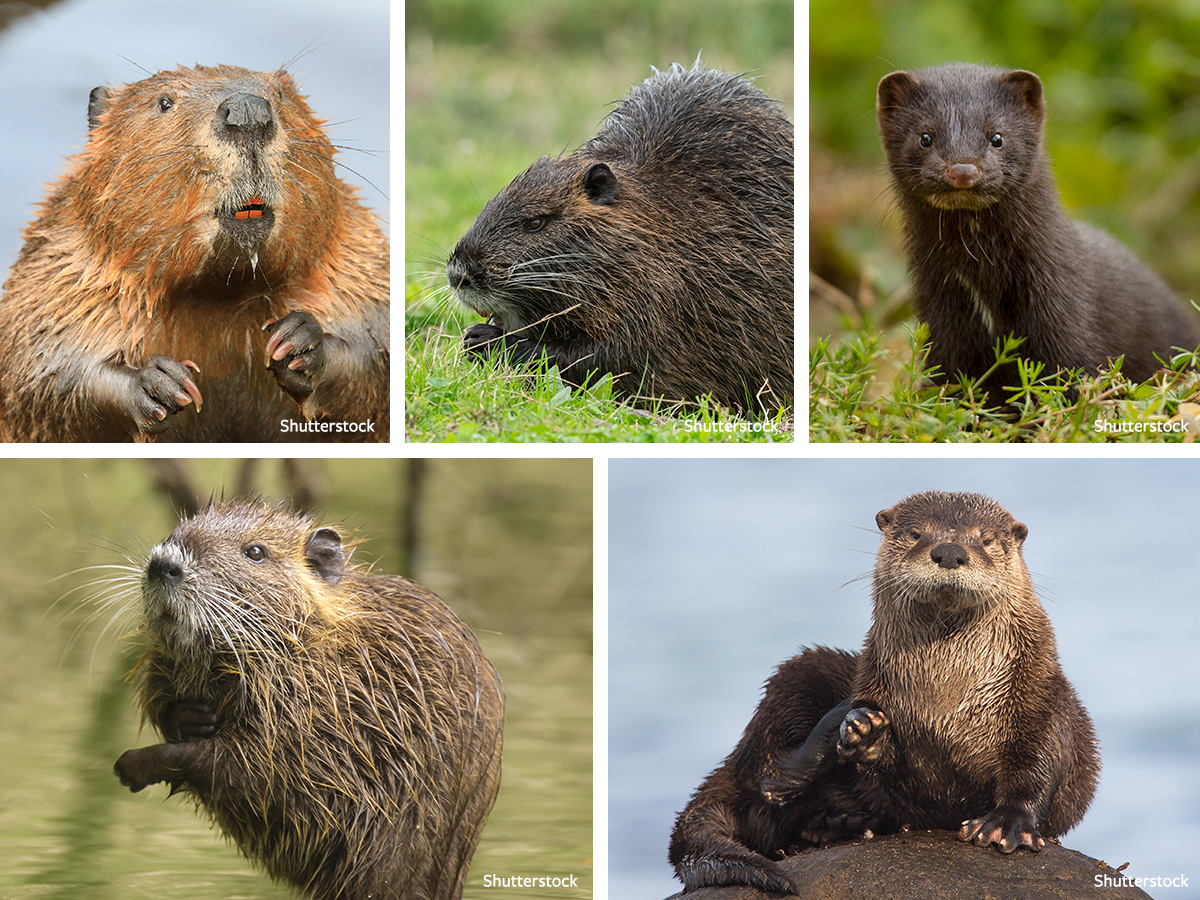
The U.S. Department of Agriculture’s Wildlife Services is preparing to kill thousands of semi-aquatic animals like beavers, nutria, muskrats, river otters, and mink in Oregon. Urge Wildlife Services to consider a new alternative as a part of its Environmental Assessment that only utilizes non-lethal solutions to human conflicts with these animals.
Wildlife Services senselessly kills countless animals across the United States every year. The agency releases plans ahead of killing these animals, as it did recently for birds in Arizona, Arkansas, Louisiana, and Georgia. Sadly, despite almost overwhelming public disagreement with its various cruel plans, it opts for killing animals over other strategies involving coexistence time and time again.
The agency’s plan under Alternative 2 states a preference for non-lethal methods when resolving perceived conflicts with beavers, but still allows for the killing of nutria. Nutria are considered “invasive” in the area, a concept that is sorely misguided. Killing large numbers of animals who naturally migrate from place to place is not only cruel but also does not address the human behavior behind the negative impacts that are the true causes of environmental imbalances.
Beavers are most often perceived as a threat because of flooding that sometimes occurs as a result of beavers building their dams. In reality, beavers are integral to maintaining healthy ecosystems. Beavers help to create and maintain wetlands which have extreme ecological importance. Preventative non-lethal methods such as exclusion and flow devices, and pond levelers, are widely available and are often less costly than killing beavers. These devices allow beavers to remain in the area unharmed while also preventing flooding of roads and other human-created infrastructure.
The idea that beavers are nuisance animals who should be killed is unfounded and entirely untrue. In fact, the Environmental Assessment even cites a study that found 87% of Oregon residents who were surveyed understood the benefits that beavers provide to other animals by creating wetlands. 57% even want beavers to live on or near their land!
Instead of focusing on the strongly declared interest in coexistence, the Environmental Assessment goes on to list the brutal ways that muskrats, nutria, beavers, river otters, and mink will be killed. The list includes leghold traps, body-gripping traps, snares, and firearms. The cruelty doesn’t stop there, though, because Wildlife Services will also kill these animals using rodenticides, which not only cause painful organ failure in rodents but also move up through the food chain to the predators who eat them.
Wildlife Services should prioritize non-lethal strategies like flow devices, abrasive surfaces to discourage chewing, and educational programs to foster coexistence, rather than archaic and harmful killing methods like traps and rodenticides.